

Online equalizer
Cut or boost six bands, from sub bass to air, or start from a preset. Free, and the file never leaves your device.
Made in your browser. Your song never leaves your device.
 Your new version will appear here.

How to equalize a song online
Add your song
An MP3, WAV, M4A or the sound from a video. It stays on your device.
Move the six bands
Start from a preset such as Bass boost or Vocal clarity, then fine-tune each slider.
Listen and download
Hear the change in the page, adjust, then save it as MP3 or WAV.
What an online equalizer does
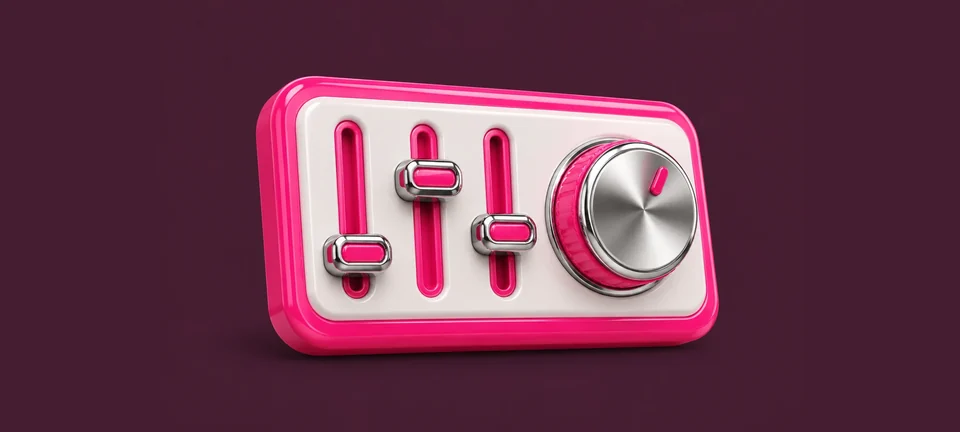
An online equalizer changes the balance between low, middle and high sounds in your track. This one has six bands, at 60 Hz, 170 Hz, 500 Hz, 1.5 kHz, 4 kHz and 10 kHz, each cut or boosted by up to 12 dB.
Five presets set the sliders in one tap: Flat, Bass boost, Treble boost, Vocal clarity and Loudness, which raises bass and treble together. The level is lowered automatically when needed, so boosted audio never clips.
The audio equalizer runs in your browser and your file is never uploaded. It reads MP3, WAV, M4A, AAC, OGG, FLAC and the sound from MP4 and MOV videos, up to 15 minutes long.
See the Muzie AI music video generator

When to EQ a song online
Clearer spoken word
A podcast clip or interview sounds muffled. Use the Vocal clarity preset or lift 1.5 kHz and 4 kHz a little so every word is easier to follow.
Taming a harsh recording
A phone recording of your band sounds sharp and tiring. Cut 4 kHz and 10 kHz by a few dB to soften cymbals and edgy guitars.
Fixing a boomy room
A rehearsal recorded in a small room sounds boomy and boxy. Lower 170 Hz and 500 Hz slightly to clear the mud and let the instruments breathe.
Music for quiet listening
At low volume, bass and treble seem to fade first. The Loudness preset raises both together so your song still sounds full when played quietly.


Equalizer tips for better sounding audio
Cut before you boost
If a track sounds muddy, lowering 170 Hz or 500 Hz often helps more than raising the treble. Cutting is usually cleaner than boosting.
Make small moves
Changes of 2 to 4 dB are usually enough. Large moves quickly make a track sound unnatural, so go further only when a problem is obvious.
Start from a preset
Pick the preset closest to what you want, then adjust single bands from there. It is quicker than moving all six sliders from flat.
Compare at equal volume
A boosted version can seem better just because it is louder. When you compare with the original, match the volume first so you judge the tone.
What each band of the audio equalizer holds
The 60 Hz band holds sub bass and the thump of the kick drum. At 170 Hz you find the body and warmth of bass, guitars and voices. Too much there sounds muddy. Around 500 Hz sits boxiness, the hollow sound of a small room or a cheap speaker.
At 1.5 kHz lives vocal presence, the part of a voice that carries words forward. The 4 kHz band adds clarity and attack, the click of a kick and the bite of a guitar. At 10 kHz you hear air and cymbals, the shimmer at the very top.
Shape a track by finding the problem first. Boost one band strongly, sweep through by ear, and notice where the track sounds worst. Then cut that band a few dB. Finish with a small lift where something is missing, and compare often with the Flat preset.

Online equalizer questions
How do I use the online equalizer?
Add the file, pick a preset or move the six sliders, and press Apply the equalizer. Listen to the result, adjust if needed, then download it.
Is the online equalizer free?
Yes, free. No sign-up, no watermark and no cap on the number of songs.
Is my song uploaded anywhere?
No. Your song is read and changed in your browser, so it stays on your phone or computer.
What are the best equalizer settings for music?
There is no single best setting, because every song and speaker differs. Start with a preset close to what you want, then make small changes of 2 to 4 dB.
How do I make vocals clearer with EQ?
Use the Vocal clarity preset, or lift 1.5 kHz and 4 kHz by a few dB. If the voice sounds muddy, also cut 170 Hz or 500 Hz slightly.
Can I use this equalizer on an MP3?
Yes. Add your MP3, set the six bands and save the result as MP3 at 192 kbps or as WAV. Your original file stays unchanged on your device.
What does the Loudness preset do?
Loudness raises bass and treble together. It helps music sound full at low volume, where the lowest and highest sounds seem to fade away before the middle does.
Will boosting the equalizer bands distort my audio?
No. The level is lowered automatically when needed, so boosted audio never clips. A large boost may make the overall track slightly quieter as a result.
More free tools
Every tool is free and works straight away.
 Pitch changerMove a song up or down in semitones.
 Slowed and reverb generatorSlow a song down and add reverb.
 Bass boosterAdd more bass to your song.
 8D audio converterMake a song circle around your head.
 MP3 to MP4Add a picture to your MP3 and save it as a video.
 WAV to MP4Wrap a WAV mix or master in a video you can post.
Your first music video is waiting
Muzie runs in your browser, no app needed